the worst case scenario.
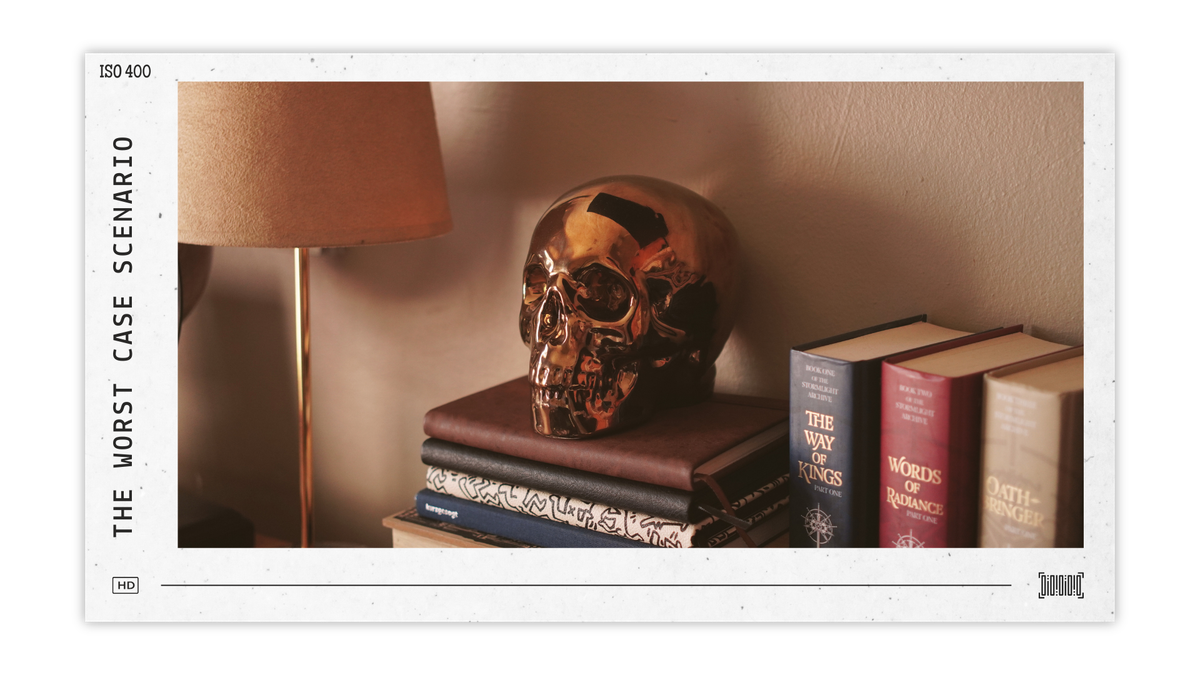
During stressful times, ask yourself: What is the worst that could happen?
No, really. What is it? Chances are, it is uncomfortable but survivable.
When I feel anxious or stress about something I’m trying to work towards, fear eventually shows up. But fear has a way of growing in the shadows, the less you define it, the bigger it feels.
Tim Ferriss suggests an exercise called fear-setting. Instead of asking what the best outcome could be, you flip it and ask: what’s the worst outcome? And then you make peace with it.
When you actually write it down, the worst case is rarely catastrophic. It’s uncomfortable, sure. But survivable. And once you know you can survive it, the fear starts to lose its grip.
This clicked for me after this past week, which ended up being particularly tough. Nothing seemed to go right and the stress kept piling on. At some point my boss reminded me to ask myself: What’s the absolute worst that could happen here?
The answer was simple. Things might go wrong. I might stumble. I might feel embarrassed. But I’d still be here. I’d still have another shot. I’d survive.
Fear-setting doesn’t erase the challenge, but it shrinks it down to size. Once you’ve looked the worst case in the eye, you can stop spiraling and start moving.
This Week’s Prompt:
What’s one challenge weighing on you right now, and what’s the true worst-case scenario if it went wrong?
Write it down. Face it. Make peace with it.
If you can live with the worst, you’re free to chase the best.
See you next Sunday,
Arteri